Stranger Things : Childhood Best Memory
It took nine years, but Stranger Things finally closed the door on the Upside Down. The show that turned Eggo waffles into a merchandising phenomenon and gave an entire generation of kids their first taste of retro horror wrapped its story on New Year's Eve, and true to form, it went out loud, messy, emotional, and more than a little divisive.
Where It All Began
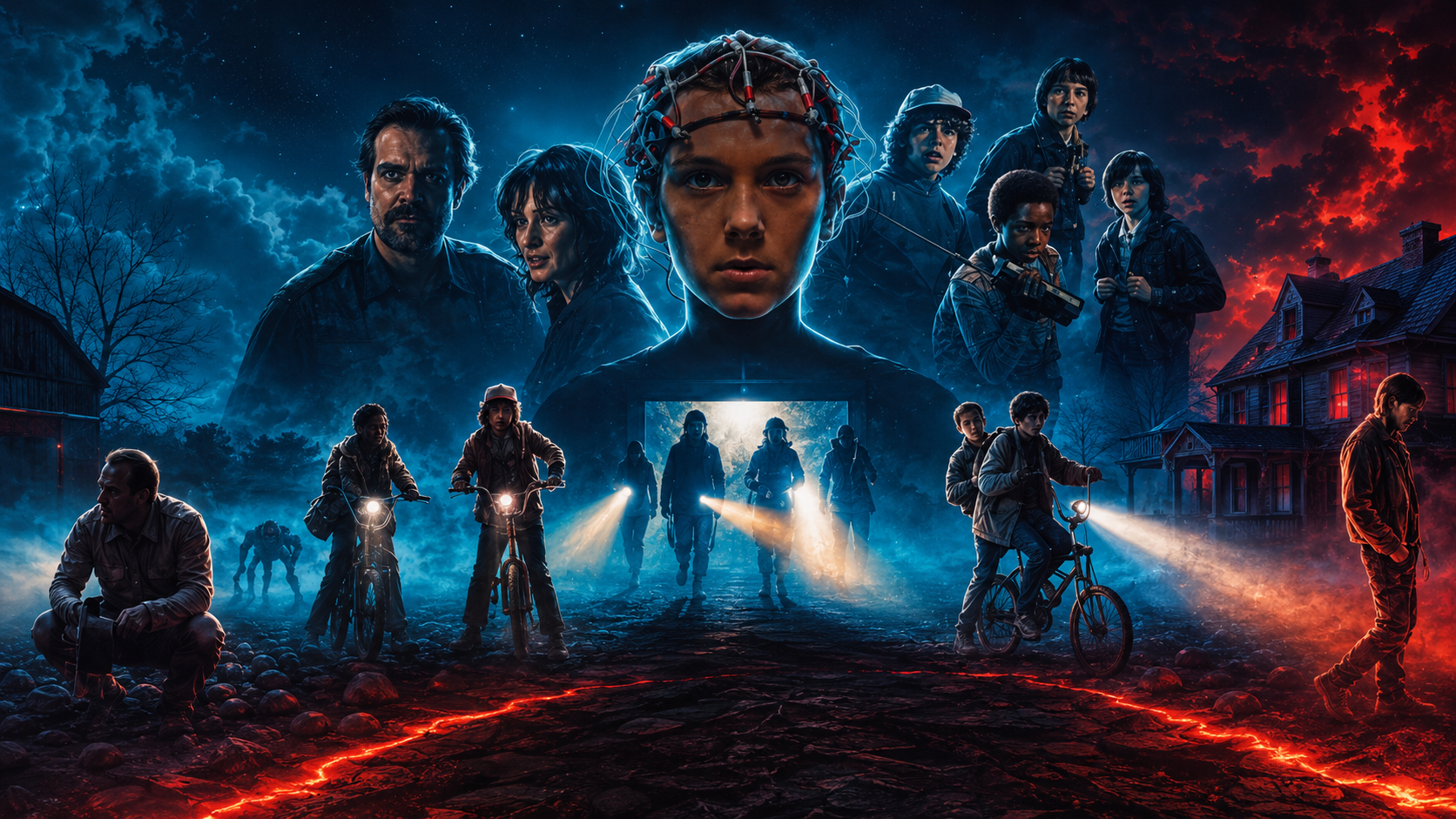
The premise that launched a thousand conspiracy theories was always simple at its core: a government lab running unethical experiments on children cracks open a door to a parallel dimension, and nobody involved fully understands what they've unleashed. Eleven, the girl at the center of those experiments, develops psychic abilities so far beyond ordinary human capacity that she inadvertently tears that door open herself while trying to escape her captors.
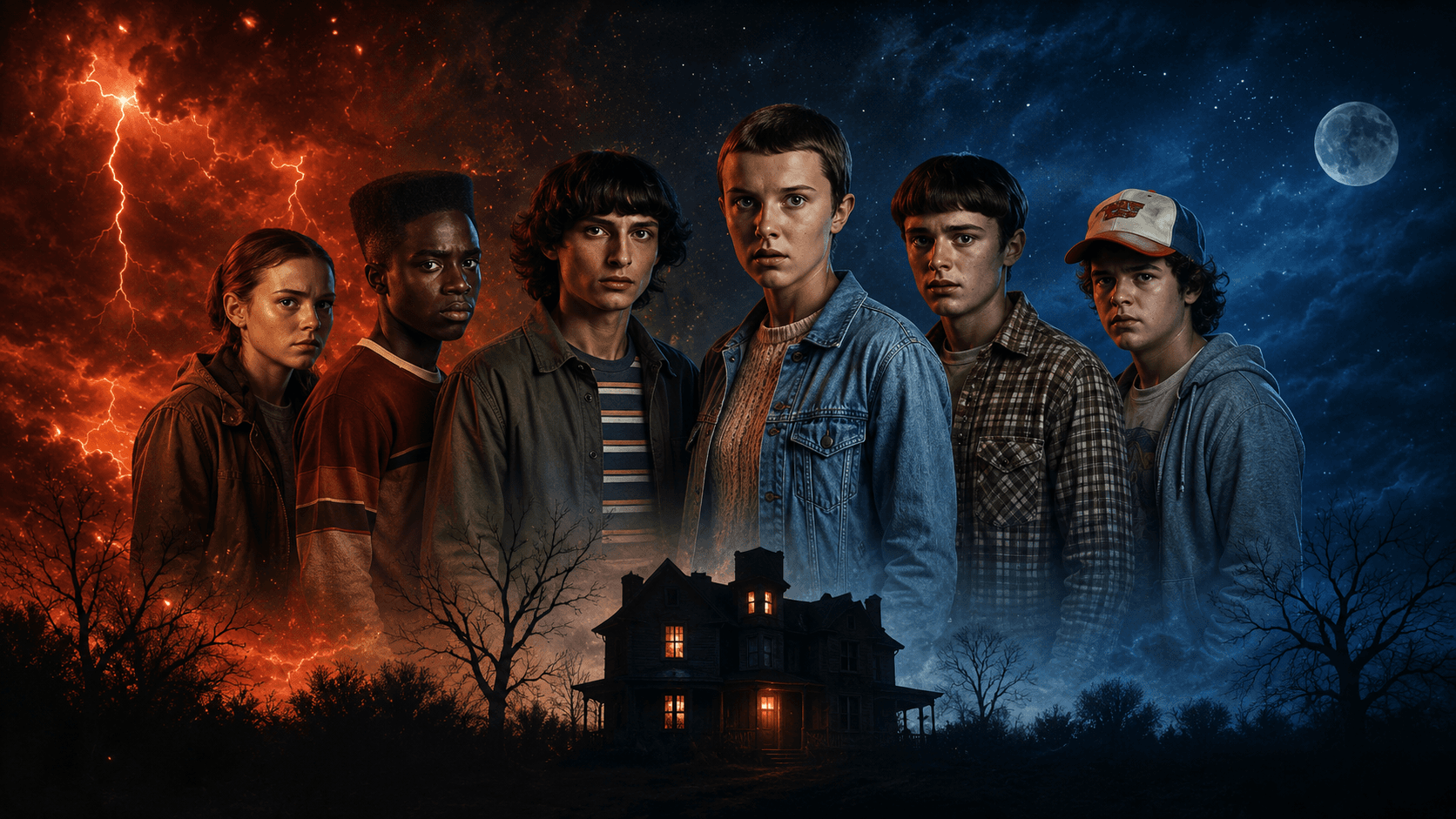
What made the show work from its very first season wasn't really the monster, though — it was what happened after Eleven ran. A small-town kid named Will Byers vanishes into the Upside Down, and his disappearance pulls together an unlikely coalition: his friend group, his mother Joyce refusing to accept the official explanation for his absence, a jaded police chief slowly getting dragged out of his own grief, and eventually a popular high schooler named Steve Harrington who becomes far more than the jock archetype he initially appears to be. That ensemble, more than any single mystery box, is what carried the show across five seasons and nearly a decade of real-world time.
A Long Goodbye, Told in Three Parts
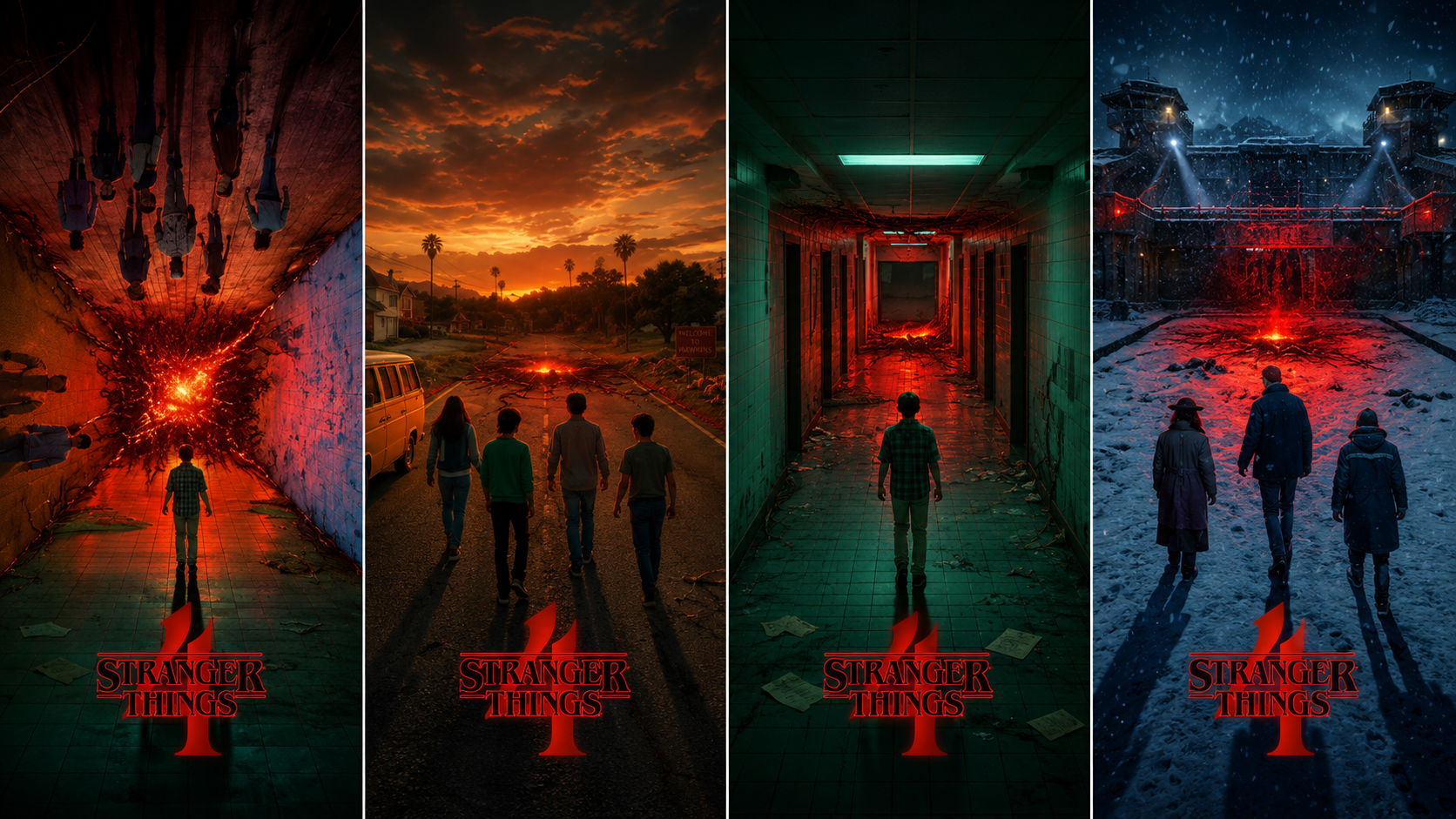
Netflix opted to release the final season in three installments — the first four episodes arriving November 26, 2025, the next batch on Christmas Day, and the two-hour series finale premiering New Year's Eve. The entire original cast returned for the send-off: Winona Ryder as Joyce Byers, David Harbour as Jim Hopper, Millie Bobby Brown as Eleven, Finn Wolfhard as Mike Wheeler, Gaten Matarazzo as Dustin Henderson, Caleb McLaughlin as Lucas Sinclair, Noah Schnapp as Will Byers, Joe Keery as Steve Harrington, Sadie Sink as Max Mayfield, Natalia Dyer as Nancy Wheeler, Charlie Heaton as Jonathan Byers, Maya Hawke as Robin Buckley, Brett Gelman as Murray Bauman, Priah Ferguson as Erica Sinclair, and Jamie Campbell Bower as the season's central threat, Vecna.
That staggered rollout gave fans months to sit with the show's final stretch, and it also meant the internet had plenty of time to argue about nearly every choice the Duffer Brothers made along the way.
The Battle for Hawkins
The endgame hinges on Vecna completing his transformation by fully merging with the Mind Flayer, becoming a towering, spider-like entity that embodies everything the show has been building toward since Will's original disappearance. Facing a threat that size forces the Hawkins crew to split up entirely — one group heads into Vecna's mind to weaken him from the inside, others rig explosives meant to collapse the Upside Down itself, and a third group races to rescue a dozen kidnapped children being held inside the Mind Flayer's body, including Mike's little sister Holly.
It's a chaotic, multi-front climax, and it doesn't come cheap. Kali is killed during a military ambush at Hawkins Lab, one of several losses that make the final stretch feel considerably heavier than the show's earlier, more adventure-driven seasons.
The actual defeat of Vecna plays out as a genuine team effort. Eleven fights her way into the creature's body and manages to drive him onto a spire, but it's Will — using his long-standing, uncomfortable psychic connection to Henry Creel, the human being Vecna once was — who briefly seizes control from the inside and holds him still long enough for the killing blow to land. And that blow doesn't come from Eleven at all. It's Joyce Byers who steps forward with an axe and beheads Vecna herself, delivering the line "You fucked with the wrong family" as she does it — the show's creators reportedly settled on Joyce for the kill specifically because she was the first character, back in Season 1, to insist that something strange was actually happening in Hawkins.
What Happens to Eleven
If there's one thread the finale deliberately leaves loose, it's Eleven's own fate. After the dust settles on Vecna's defeat, Eleven disappears, and the show jumps forward eighteen months to show what's become of the rest of the Hawkins crew — new romances, new careers, a town slowly rebuilding. Eleven's own status is never definitively confirmed one way or the other, and the show leans into that ambiguity rather than resolving it, closing on a callback moment during a Dungeons & Dragons scene that reads as a hint she might still be out there somewhere. It's a choice that will likely keep fan theories alive long after the show's final episode has aired.
Will's Long-Awaited Moment
Of everything in this final season, nothing generated more conversation — or more backlash — than Will Byers's arc. Will's sexuality had technically been confirmed back in Season 4, in an episode where he shows Mike a painting that functions as an unspoken confession of his feelings, though Will himself never says the words out loud, and Mike remains entirely oblivious to what the gesture actually means. Season 5 finally closes that loop. In the penultimate episode, "The Bridge," Will comes out to his friends and family in a lengthy, visibly difficult monologue, delivered right before the group heads into their final confrontation with Vecna.
He doesn't use the words "I'm gay" outright — instead telling the group, "I don't like girls. I mean, I do. Just not like you guys do" — but the scene leaves no ambiguity about what he means. The Duffer Brothers have described the moment as the final step in Will's personal arc and, in a narrative sense, the key that ultimately helps take Vecna down — framing his self-acceptance as directly tied to his ability to help defeat the season's villain.
The reaction was intense, and split hard along predictable lines. "The Bridge" became the show's lowest-rated episode on IMDb, and drew vocal criticism from corners of the internet that saw the scene as an unwelcome tonal detour from the show's sci-fi core. But plenty of critics and fans pushed back on that framing, arguing the show had genuinely been building toward this moment for nine years, and that Noah Schnapp's performance — described by Ross Duffer as "brave" and "vulnerable" — earned the emotional weight the scene was clearly going for. Schnapp himself has said filming the scene felt like a weight coming off his chest, having known since reading the early scripts that this was where his character's arc was finally headed.
Steve, the Reluctant King
If Will's arc closed the show's longest-running emotional thread, Steve Harrington's closed one of its most beloved. Steve began the series as Hawkins High's resident golden boy — charming, a little vain, not especially kind — and spent five seasons slowly earning the nickname fans gave him half-ironically and, by the end, entirely sincerely: King Steve.
What makes Steve's arc land isn't some clean redemption arc where his flaws vanish. He never fully wins back Nancy Wheeler, his ex who's moved on with someone else by the time the show wraps, and he carries that quiet loss with him even as he continues protecting her and everyone else in Hawkins without complaint. Instead, his real transformation happens in how he treats the younger kids in the group — Dustin, Lucas, Erica, all of them — stepping into a mentor role despite still being deeply flawed himself. It's a version of growing up the show clearly cares about: not becoming perfect, just becoming useful to the people who need you.
A Legacy Bigger Than the Upside Down
Whatever critics made of the final stretch's pacing or its more divisive choices, there's no disputing what Stranger Things did for the careers built inside it. Millie Bobby Brown became a global star practically overnight thanks to Eleven, and Sadie Sink has continued riding that momentum into major franchise work, including an upcoming role in Spider-Man: Brand New Day. The show's willingness to let its young cast visibly age across nine real-world years — height, faces, voices all changing on screen in real time — gave it a sense of lived-in authenticity that few genre shows ever manage.
Nine years, five seasons, and one deeply contested finale later, Stranger Things leaves behind a stranger, sadder, more complicated Hawkins than the one it introduced back in 2016 — and an ending that, love it or hate it, clearly wasn't interested in playing it safe on its way out the door.